|
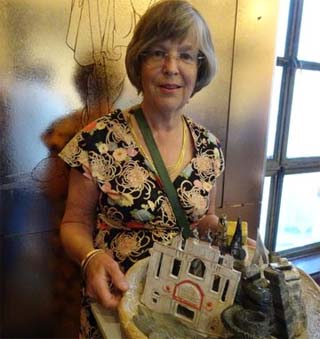
The bid to inscribe Portsmouth Harbour, the Isle of Wight and Spithead onto UNESCO’s World Heritage list as the world’s first Cultural Seascape was launched to 150 people on 28 January 2008. Our purpose is to increase the international profile of the area’s outstanding history, focused on naval supremacy and defence of the realm - and to raise the standard of conservation and maintenance of our historic fabric - via heritage-led regeneration. Large areas of water shaped by people have not been included on the World Heritage list before. Celia Clark leads a team drafting the Nomination Document. Learn more: www.notion.webspace.virginmedia.com/heritage/ , www.portsmouthsociety.org.uk
The Value of Heritage: Portsmouth Harbour’s Bid for World Heritage Site Status
By Kilian Murphy
Dissertation presented for the Honours degree of BA School of Geography University of Nottingham 2011
Abstract
Heritage, by its very nature, is a multi-faceted concept with diverse values for different locations, individuals and organisations. Cultural heritage conservation has emerged as a pertinent contemporary issue on both a domestic and international scale. Inscription to UNESCO’s World Heritage list is regarded as the benchmark standard to which significant historical sites and monuments aspire. By studying a specific locale in the bidding process to become a World Heritage Site, a platform is provided upon which to explore the values placed upon this designation and heritage in general. The paper focuses on Portsmouth Harbour and the narrative of the area’s bid for World Heritage Site status supplemented by the experiences of those responsible for managing other current and prospective UK World Heritage Sites. This paper revealed that there are contrasting values attributed to heritage, which can lead to contestation between local stakeholders, actors and authorities. A further key finding was that there is a general consensus that the ‘bottom-up’ nature of the UK nomination process provided the ancillary benefit of creating a forum in which associated parties can collaborate. This facilitates the potential for spatial improvements, raising awareness of heritage conservation issues, as well as putting on the agenda the overall desirability For further details - contact Celia Clark
Heritage led re-generationXingcheng
Xingcheng in Liaoning Provice From 2004-6 an AsiaUbs project linked three local governments: Portsmouth, Xingcheng in north east China, and Obidos in Portugal to work together on management of their built heritage including their ancient city walls, and learn how income from tourism can be directed into physical regeneration to improve living conditions for local people.
|
| Last Updated on Tuesday, 04 December 2012 15:15 |